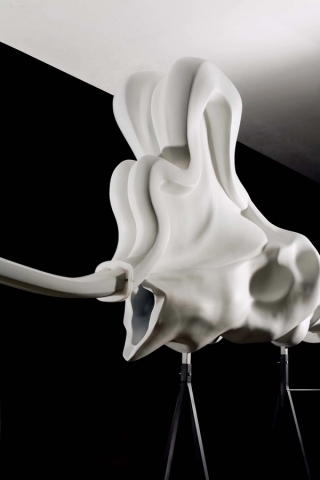
Rawr! study in sonic skulls: Embodied natural history
Courtney Brown, Sharif Razzaque, Garth Paine
From Proceedings of the International Conference on New Interfaces for Musical Expression, Baton Rouge, US, 2015
Abstract
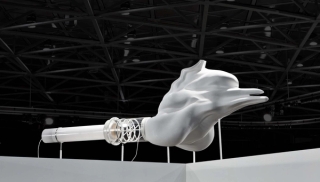
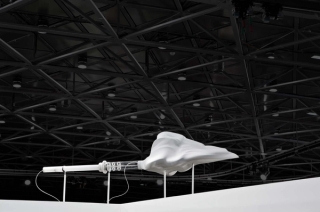
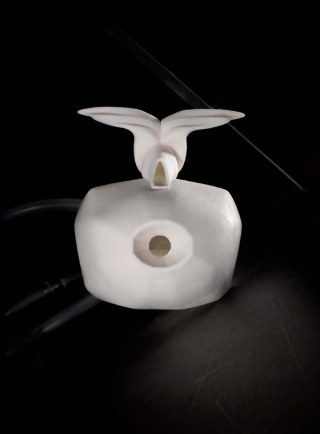
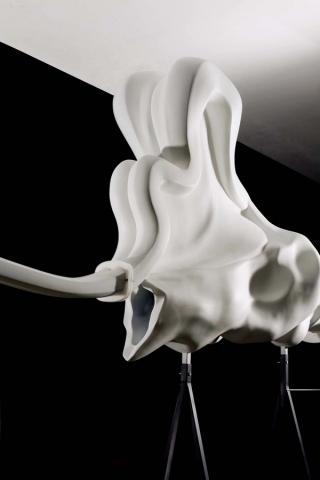
Lambeosaurine hadrosaurs are duck-billed dinosaurs known for their large head crests, which researchers hypothesize were resonators for vocal calls. This paper describes the motivation and process of iteratively designing a musical instrument and interactive sound installation based on imagining the sounds of this extinct dinosaur. We used scientific research as a starting point to create a means of sound production and resonator, using a 3D model obtained from Computed Topology (CT) scans of a Corythosaurus skull and an endocast of its crest and nasal passages. Users give voice to the dinosaur by blowing into a mouthpiece, exciting a larynx mechanism and resonating the sound through the hadrosaur's full-scale nasal cavities and skull. This action allows an embodied glimpse into an ancient past. Users know the dinosaur through the controlled exhalation of their breath, how the compression of their lungs leads to a whisper or a roar.
Keywords
NIME, dinosaur, sound installation, digital fabrication