Poumon B12, Le Drap dans l’Halogène
Undisclosed Location, Paris, France
30 septembre 2017
Commissariat Rebecca Lamarche-Vadel
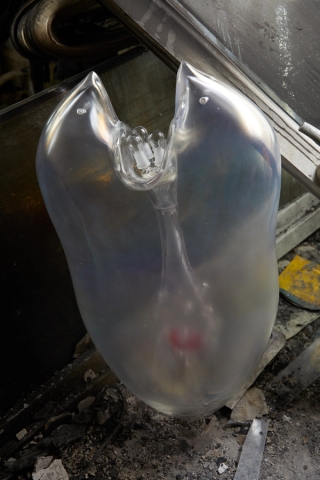
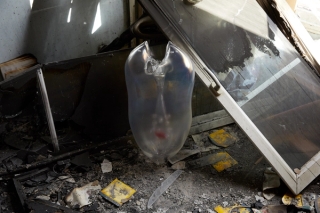
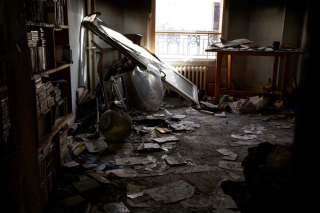
Poumon B12 is a site-specific artwork installed in an abandoned apartment in Paris, one ravaged by a recent fire. Made from iridescent, handblown glass, Poumon B12 takes the form of an artificial lung, and contains a cyanide antidote able to counter the poisonous effects of the toxic smoke emitted when a building burns. While the work contains the active agents capable of treating smoke poisoning, the solitary placement of Poumon B12 within the already-singed walls of the apartment makes it unclear whether it was successful in saving lives. Marguerite’s consultations with a medical toxicologist and pulmonologist during the creation of the work informed its shape and nature; such research presages her interest in the act of breathing and respiratory systems, which later find expression in projects such as High Tide and Mist (both 2019).