Marguerite Humeau, The History of Humankind, An artificial voice is beatboxing the origin of human language before joining a choir of 108 billion voices. This is the number of humans who have ever lived on Earth since the beginning of humankind, 100 000 years ago, 2016.
Marguerite Humeau, FOXP2, 2016. André Morin for Palais de Tokyo
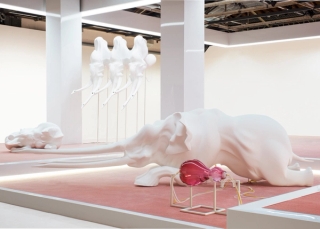
Marguerite Humeau, Echo, A matriarch engineered to die, 2016.
Marguerite Humeau, Body Without Soul, 2016.
Marguerite Humeau, FOXP2, 2016. Palais de Tokyo, Spassky Fischer.
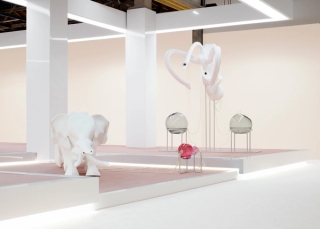
Marguerite Humeau, Jean, An elephant watching the scene with a sense of wonder, 2016.
Marguerite Humeau, FOXP2, 2016. Palais de Tokyo, Spassky Fischer.
Marguerite Humeau, Bastien, A foetus is getting born, 2016.
Marguerite Humeau, Enid, A female engineered to cry out of sadness, 2016.
Marguerite Humeau, Tony, A female engineered with despair, 2016.
Marguerite Humeau, Vronski and Deborah (Lovers), Two elephants engineered to romantically fall in love with each other, 2016.
Marguerite Humeau, FOXP2, 2016. Spassky Fischer.
Marguerite Humeau, FOXP2, 2016. André Morin for Palais de Tokyo, Spassky Fischer.
Marguerite Humeau, Pierre, An elephant engineered to be happy, 2016.
Marguerite Humeau, Félicie, A female engineered to be selfdestructive – it gets drunk with ethanol that comes from a masala fruit, 2016.
Marguerite Humeau, Enid, A female engineered to cry out of sadness, 2016.
Marguerite Humeau, Jean, An elephant watching the scene with a sense of wonder, 2016.
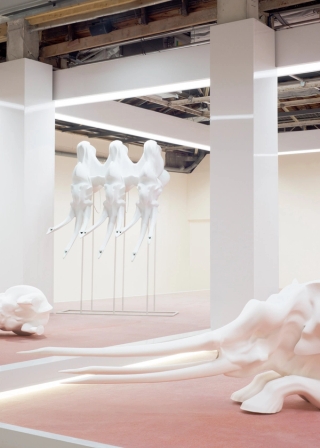
Marguerite Humeau, Edwina, Amelia, Antonia, Three females which larynges that have gone down, allowing them to sing in an almost articulated language, 2016.
Marguerite Humeau, EMMETT, A male in artificial oestrus showing highly visible signs of aggressivity, 2016.
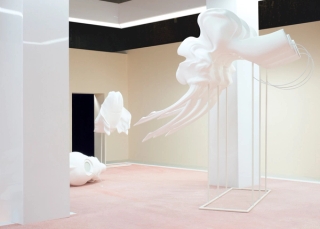
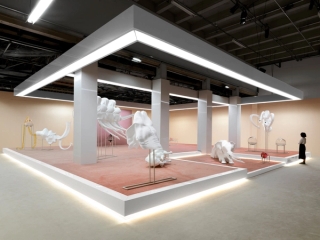
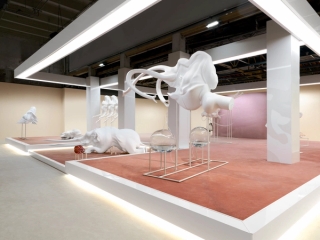
FOXP2 (exhibition view), Palais de Tokyo, 2016
Marguerite Humeau, The History of Humankind, An artificial voice is beatboxing the origin of human language before joining a choir of 108 billion voices. This is the number of humans who have ever lived on Earth since the beginning of humankind, 100 000 years ago, 2016.
Marguerite Humeau, FOXP2, 2016. André Morin for Palais de Tokyo
Marguerite Humeau, Echo, A matriarch engineered to die, 2016.
Marguerite Humeau, Body Without Soul, 2016.
Marguerite Humeau, FOXP2, 2016. Palais de Tokyo, Spassky Fischer.
Marguerite Humeau, Jean, An elephant watching the scene with a sense of wonder, 2016.
Marguerite Humeau, FOXP2, 2016. Palais de Tokyo, Spassky Fischer.
Marguerite Humeau, Bastien, A foetus is getting born, 2016.
Marguerite Humeau, Enid, A female engineered to cry out of sadness, 2016.
Marguerite Humeau, Tony, A female engineered with despair, 2016.
Marguerite Humeau, Vronski and Deborah (Lovers), Two elephants engineered to romantically fall in love with each other, 2016.
Marguerite Humeau, FOXP2, 2016. Spassky Fischer.
Marguerite Humeau, FOXP2, 2016. André Morin for Palais de Tokyo, Spassky Fischer.
Marguerite Humeau, Pierre, An elephant engineered to be happy, 2016.
Marguerite Humeau, Félicie, A female engineered to be selfdestructive – it gets drunk with ethanol that comes from a masala fruit, 2016.
Marguerite Humeau, Enid, A female engineered to cry out of sadness, 2016.
Marguerite Humeau, Jean, An elephant watching the scene with a sense of wonder, 2016.
Marguerite Humeau, Edwina, Amelia, Antonia, Three females which larynges that have gone down, allowing them to sing in an almost articulated language, 2016.
Marguerite Humeau, EMMETT, A male in artificial oestrus showing highly visible signs of aggressivity, 2016.

FOXP2

Palais de Tokyo, Paris, France

23 juin 2016 – 11 septembre 2016

Commissariat Rebecca Lamarche-Vadel

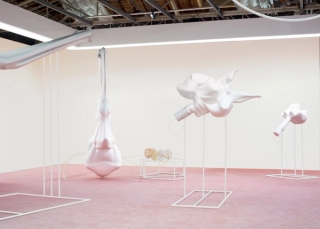
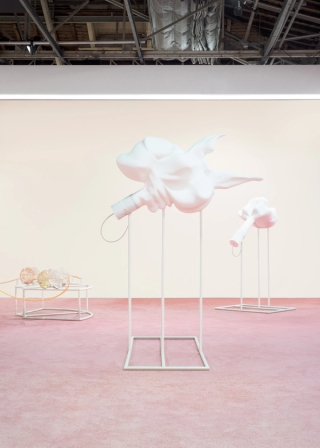
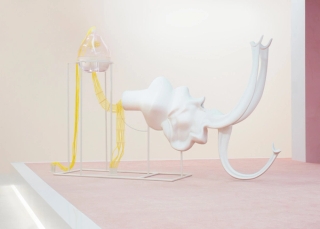
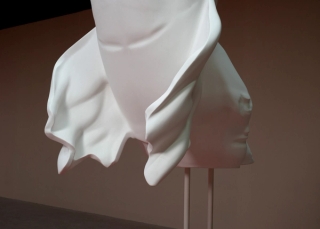
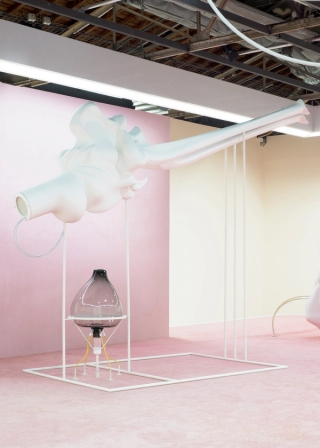
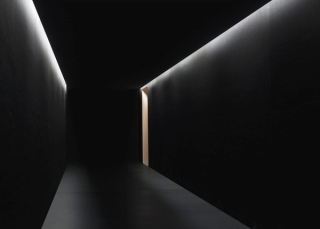
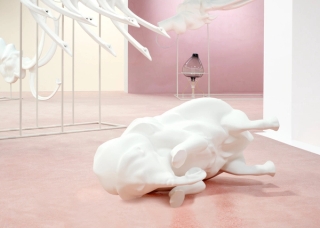
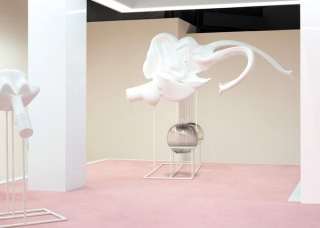
Marguerite’s project FOXP2 derives its title from the gene supposed responsible for the development of language and speech, and so often regarded as a distinguishing feature of human intellect. An exhibition of two parts, the visitor first walks a corridor that sonically charts the origin of humankind before entering the principal room, where a clan of elephants are in the midst of grieving the slow death of their matriarch.

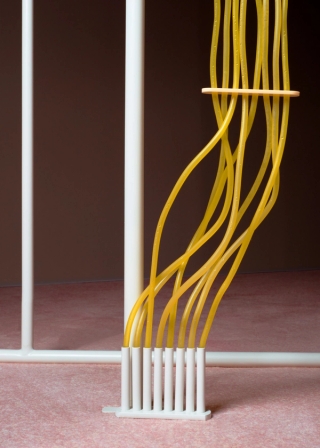
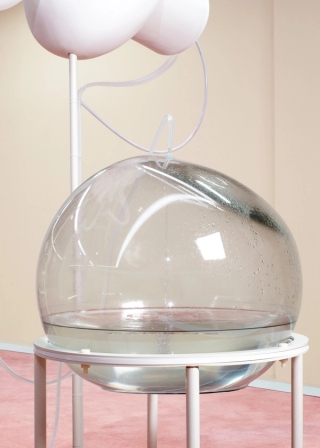
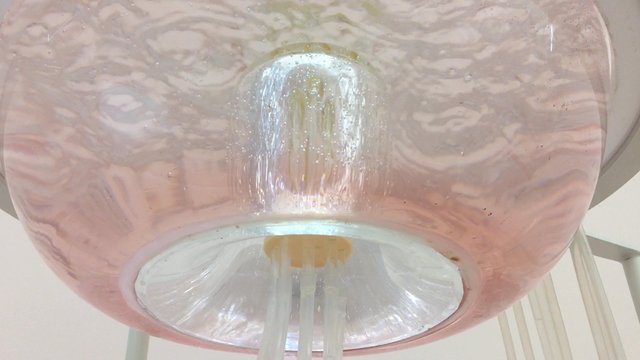
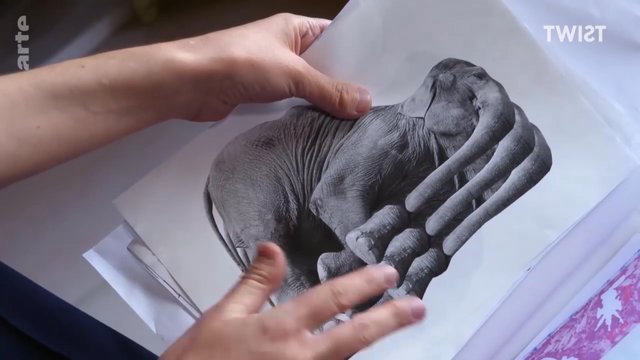
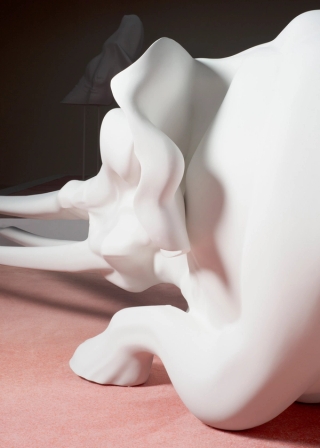
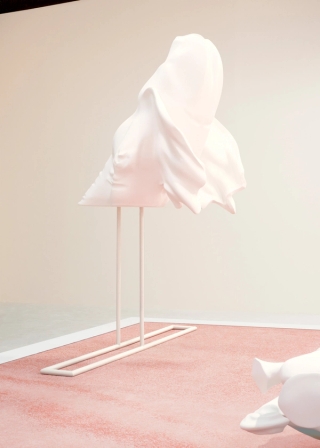
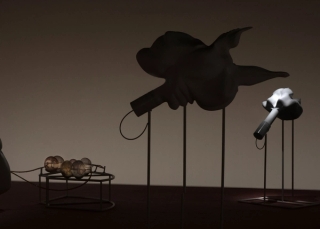
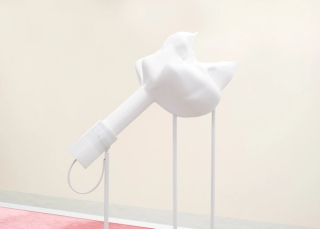
Devised as a walk through the ages, the corridor piece simulates the steps of a simian predecessor like Lucy, as she moves through terrain, weather and time. In its early portion, the visitor senses a vulnerability that accompanies her struggle to communicate. Toward the end of the corridor however, the piece graduates to whoops and other primordial sounds – the earliest suggestions of a word – until finally, the lone, first individual is joined by a chorus of 108-billion-some Homo sapiens, all who have lived on Earth since the beginning of humankind. On the other side of this sound work, Marguerite has conceived a ‘biological showroom’ and scene of mourning, one centred upon a clan of highly evolved elephants whose matriarch is dying. Working with palaeontologists, zoologists, psychologists and elephant behavioural specialists to speculate upon the development of complex emotions and communication in elephant families, the room is ensconced in the sound of a slowing heartbeat – a spatialisation of an intensely emotional moment, one that transforms the room into the matriarch’s body. As she dies, the development of new emotions and language in her family is triggered: individual chants engineered from scratch emanate from the elephantine sculptures, each of which embodies a specific emotion. All the while, a hydraulic system pumps various liquids containing hormones and elephant tears around a network of tubes – a biochemical expression of the mixity of emotions the clan is experiencing, be it sadness, anger, love.

(Sound)

The death throes of a matriarch elephant trigger an evolving chorus of voices around her, moving through sadness, melancholy, nostalgia, joy, love and amazement - as if her passage towards death were awakening new forms of emotion, language and consciousness in the group.

00 : 00 The Death of Echo, 2016 00 : 00

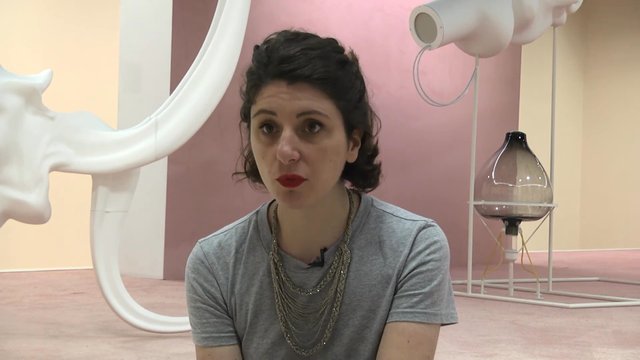
To re-trace the journey of language and its formation, Marguerite conceived The History of Humankind through elaborate reverse-engineering processes. Beginning with lone whistling, guttural throat noises and slavering smacks, this sound work graduates to rhythmic clicks and round phonemes, culminating in the song of a celestial chorus.

00 : 00 The History of Humankind, 2016 00 : 00

Annexe

Body without Soul (Liquid Human) Recipe to concoct a liquid human. Pigments made with all chemical components of a human body. Excel worksheet printed on two A4 pages with annotations.

Crédits

Show

Exhibition design and production assistant: Juliette Rambaud; Electronic and hydraulic systems development: Marcel Helmer; Carpet graphic design: Camille Thiéry; Special thanks: Bernard Buigues, Carl Safina, Taiping

Sound

Sound and lighting Orchestration: Johan Lescure; Voice synthesis, sound design, orchestration: Pierre Lanchantin (Machine Intelligence Laboratory, University of Cambridge); Voices: Gideon Wagner and Ghizela Rowe

Photography

André Morin for Palais de Tokyo; Spassky Fischer